Remote work is convenient, but it leaves managers with a question: how do you know an employee is actually working and not busy with their own things? Constantly connecting to their remote desktop is awkward and intrusive. There is a calmer path — activity-tracking software that shows the picture of the day without micromanagement.
- A direct remote-desktop connection is meant for helping out, not for constant monitoring.
- For monitoring, tracking software is more convenient: active time, apps, websites, screenshots.
- Monitoring is legal on company devices when employees are notified.
- The manager evaluates the work; the software supplies the facts.
Remote desktop vs. monitoring — what’s the difference
A remote desktop (RDP, TeamViewer, AnyDesk, and the like) is a direct connection to an employee’s screen. It’s great for helping with a task or showing something, but it’s no good for regular monitoring: you can’t stay connected all the time, and it’s uncomfortable for the employee to have someone watching in real time. For monitoring work, activity-tracking software is more convenient.
What tracking software shows for remote work
- Active time and idle periods. How much they actually worked at the computer.
- Apps and time spent in them. Work applications or entertainment.
- Websites visited. What they did in the browser.
- Screen screenshots. A clear picture of the working day.
How to set up monitoring of remote employees
- Install the tracking software on employees’ company PCs.
- Link the computers using a code from the dashboard.
- Review activity reports remotely, from any device.
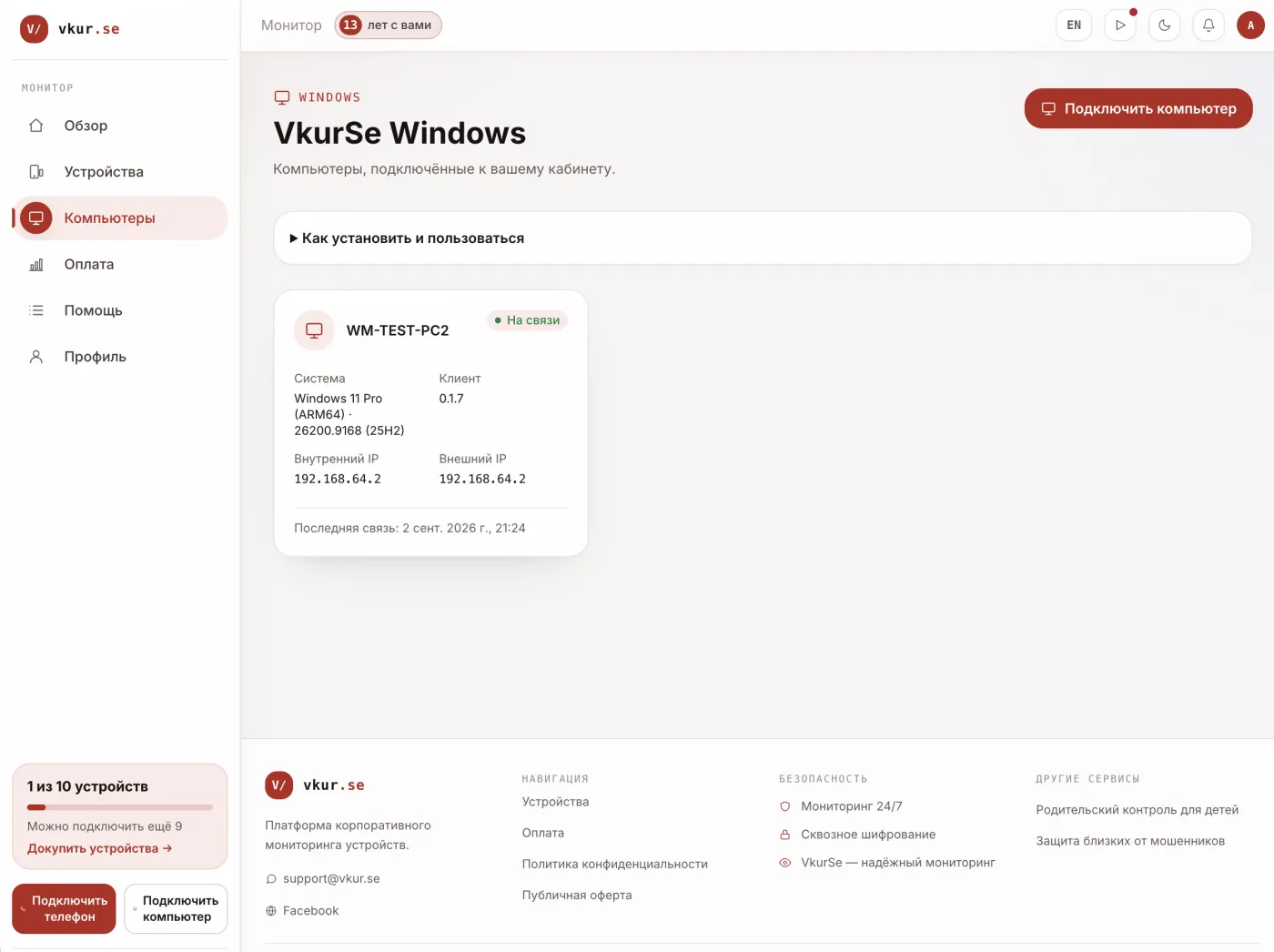
In VkurSe for Windows, the manager sees an activity report for each remote PC in the dashboard: active time, idle periods, the day’s timeline, top apps, and websites. This gives an understanding of the team’s workload without intrusively connecting to the screen.
Legal and humane
Monitoring remote employees is legal on company devices when they are notified. Agree on the rules openly: people feel calmer about tracking when they understand that it’s the result being evaluated, not every single minute.
Frequently asked questions
Can you monitor a remote employee through a remote desktop?
Staying connected all the time is awkward and intrusive. For monitoring, activity-tracking software with employee notification is a better fit.
Is it legal?
Yes, on company computers and when employees are notified. Personal devices are off-limits.
Conclusion
A remote desktop is great for helping out, but not for constant monitoring. To understand how a remote team works, use activity-tracking software — for example, VkurSe for Windows: active time, apps, websites, and screenshots in one dashboard, legally and with notification.

VkurSe for Windows
Screenshots, apps, websites and computer activity in one dashboard. Phones and PCs together. First 24 hours free.
Try it freeCreate your dashboard — the Windows installer will be in the “Computers” section