The internet is opportunity and risk at the same time for a child: useful resources sit next to unsuitable content, strangers in chats and scammers. Banning it entirely is pointless and harmful, but reasonable control of a child's internet use on the computer helps keep them safe while preserving trust.
- Start with a conversation and rules — technical tools are there to help, not to replace them.
- Basic tools: website filtering, time limits, browsing history.
- For the full picture — a program with website history and screen captures.
- Keep control open: the child knows about the rules and the oversight.
Where to start: the conversation matters more than the software
The most reliable protection is trust and an understanding of the risks. Explain simple rules to your child: don't click suspicious links, don't share personal details, and tell you about anything unpleasant. Technical tools reinforce these agreements but don't replace them.
Internet control tools
- Website filtering. Restricting access to adult and dangerous content by age.
- Time limits. Caps on hours at the computer and online.
- Browsing history. Which sites your child opened — so you can spot warning signs in time.
- Screen captures. A clear view of what was happening when the site history isn't clear enough.
Built-in tools versus third-party programs
Windows has Microsoft Family Safety with content filtering and limits — enough for younger children, but the filter mainly works in the Edge browser and is bypassed by switching browsers. For older kids, people add a third-party program that keeps a website history and screenshots regardless of the browser or the account.
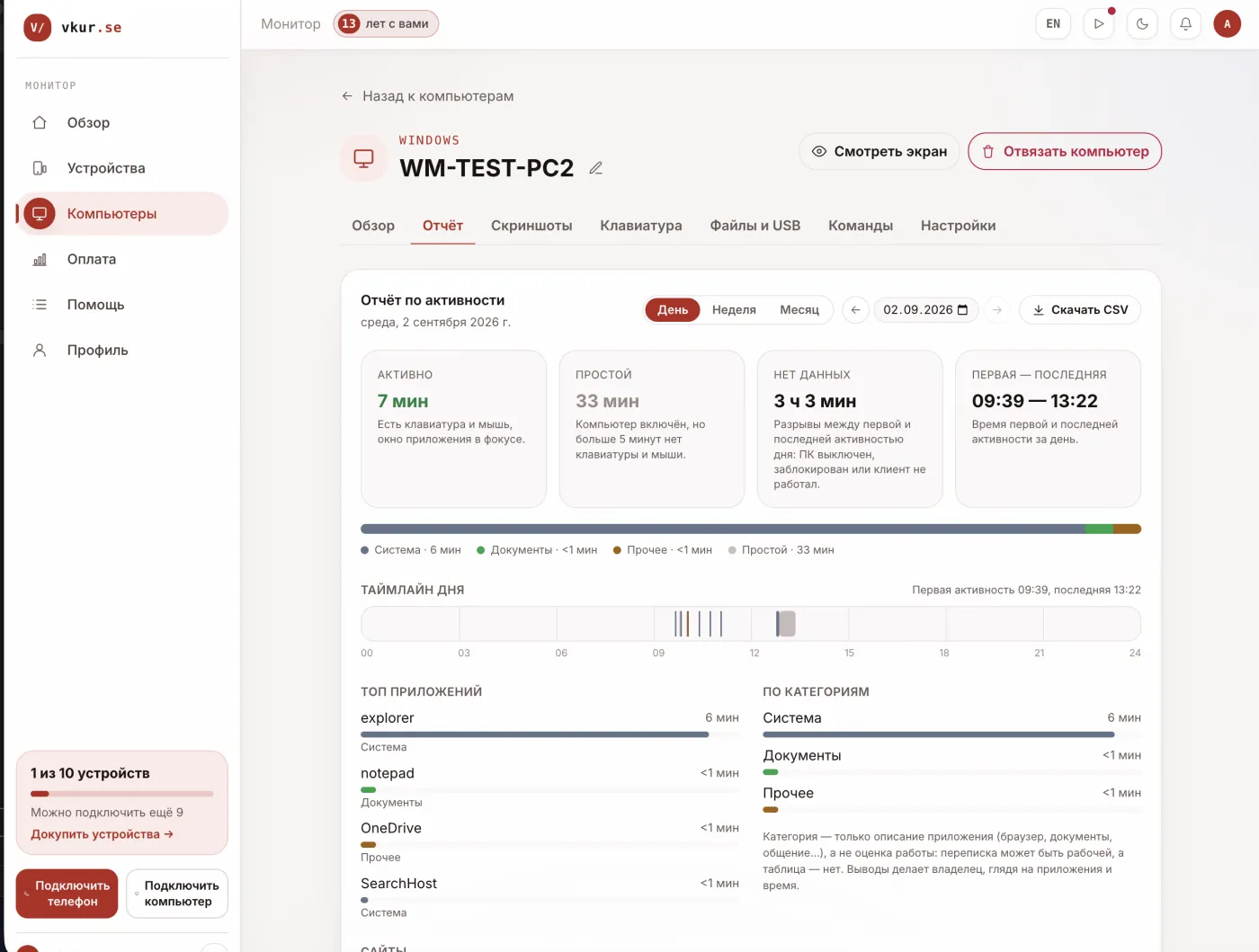
Example: how it looks in VkurSe for Windows
In VkurSe for Windows, the dashboard shows visited websites, day-by-day screen captures and app history — so you understand what your child is doing online and can step in and talk if something looks off. It's all in one dashboard, together with your kids' phones.
Warning signs worth watching for
- Sudden secrecy — the child covers the screen when you walk in.
- Unfamiliar contacts and chats, requests to “tell no one”.
- Suspicious sites, gambling, dubious purchases.
Frequently asked questions
How do I restrict a child's access to websites?
Through content filtering in Microsoft Family Safety or in a third-party parental control tool. Browsing history also helps, so you can see the real picture.
Should I read my child's messages?
Act by age and by agreement. For younger children, oversight is justified; with a teenager it's better to build trust and step in when there are real warning signs.
Conclusion
Controlling a child's internet use is a balance of safety and trust. Start with a conversation and rules, add filters and limits, and for the full picture use a program with website history and screen captures — for example, VkurSe for Windows. And keep control open: that way it protects rather than pushes away.
VkurSe for Windows
Screenshots, programs, websites and computer activity in one dashboard. Phones and PCs together. First 24 hours free.
Try it freeCreate your dashboard — the Windows installer will be in the “Computers” section